04 · 2026 · Service Design · Accessibility · UX/UI
Nourish.
A mobile food pantry and hot-meals truck that reduces food insecurity for older adults - deliberately without apps, accounts or complex technology.
- Role
- UX Designer
- Type
- Service Design · Accessibility
- Context
- HCI Studio
- Team
- Ananya, Kelly, Lavanya, Shreya
the problem
Effort is the real barrier
Grocery delivery and assistance programs assume smartphones, reliable internet and the energy to navigate complex systems. For many older adults, the effort required is the barrier - not the food itself.
Mobility & food deserts
Unsupportive built environments and distance from supermarkets limit access to fresh food.
Transportation
Thin public transit makes reaching food sources difficult without a personal vehicle.
Digital divide
Lower technology adoption makes app-based food services unusable for this population.
what we learned
- 1
Energy - not just access - is the hidden barrier to food security.
- 2
Trust and familiarity outrank speed and convenience for every participant.
- 3
Predictable schedules and plain language reduce anxiety more than more features do.
- 4
Human contact turns a transaction into a reason to show up.
approach
- 01
Discover
Market research plus interviews with older adults (60–78), caregivers and community service providers, using contextual inquiry, surveys and affinity mapping.
- 02
Define goals
Food access without apps or accounts; less physical and cognitive strain; dietary flexibility; trust through consistency; social connection; dignity preserved.
- 03
Design the service
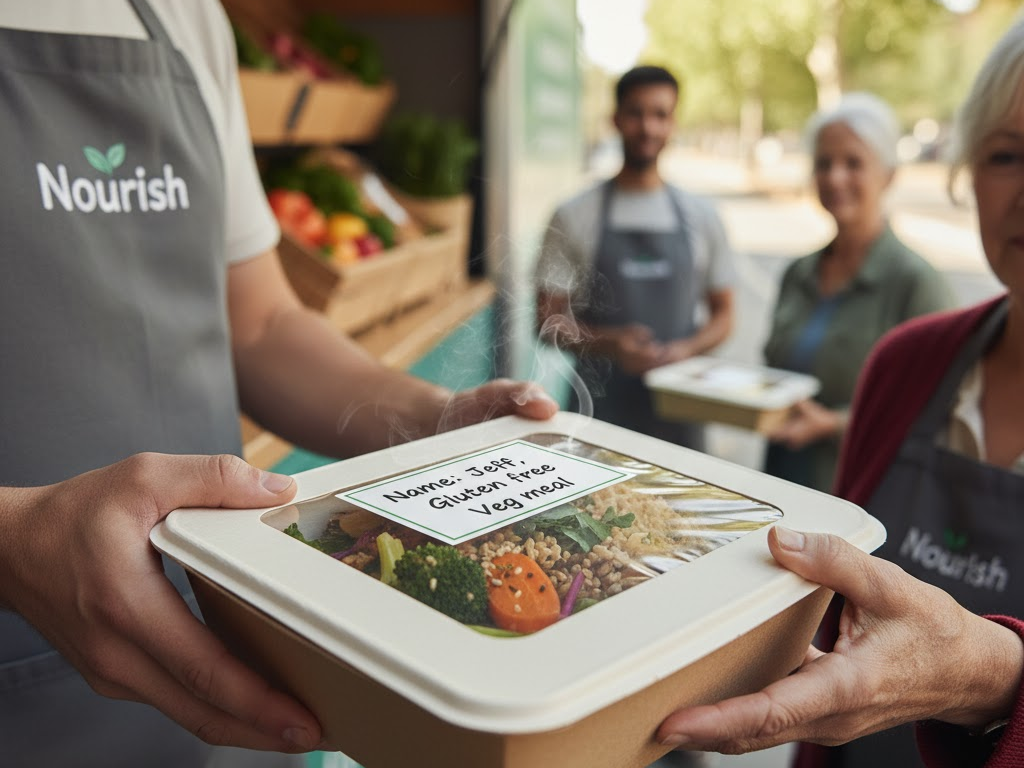
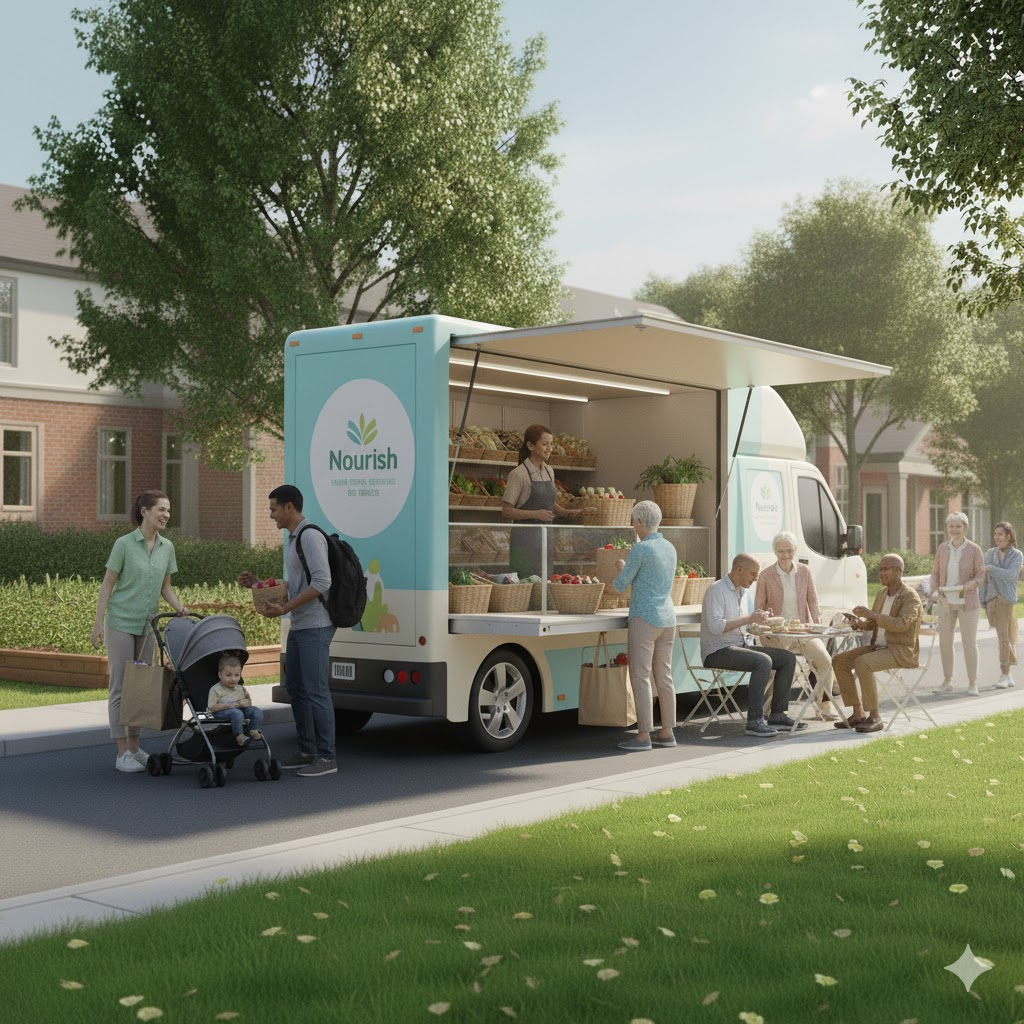
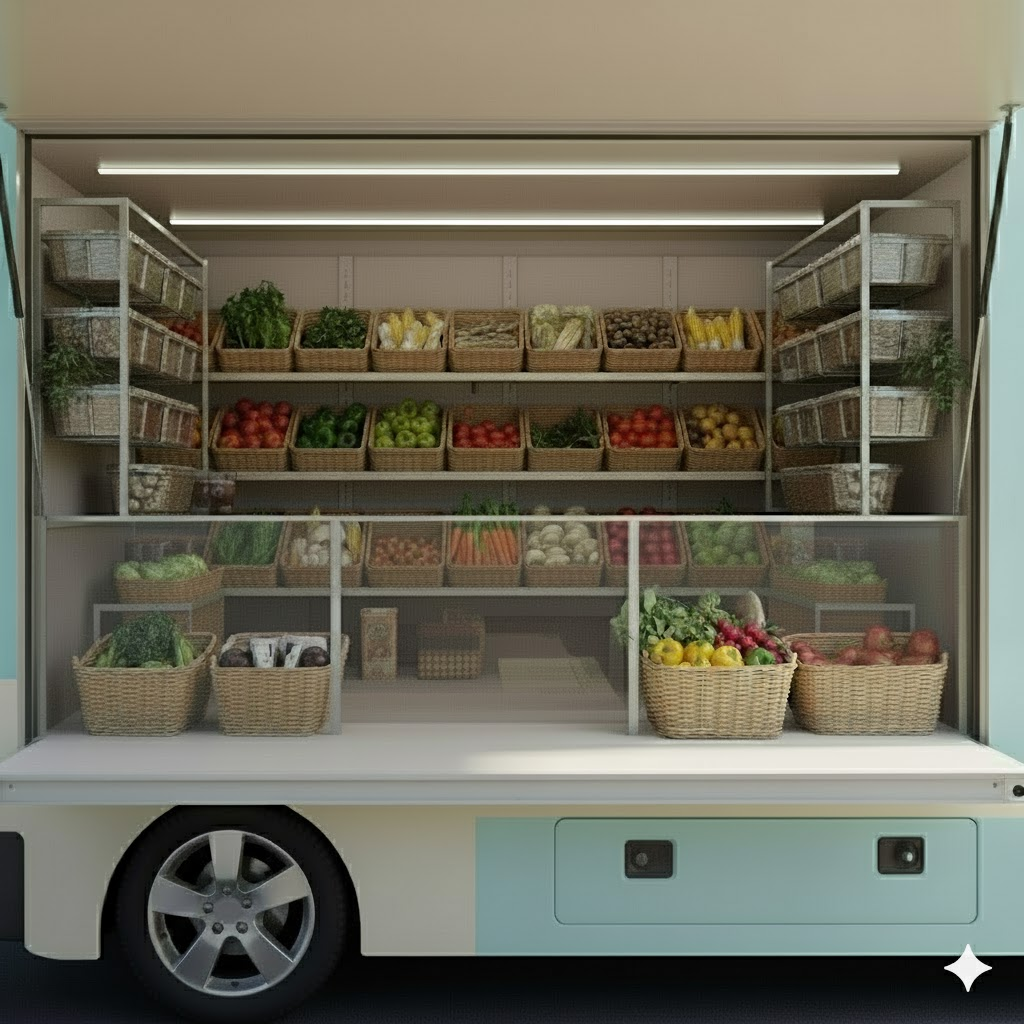
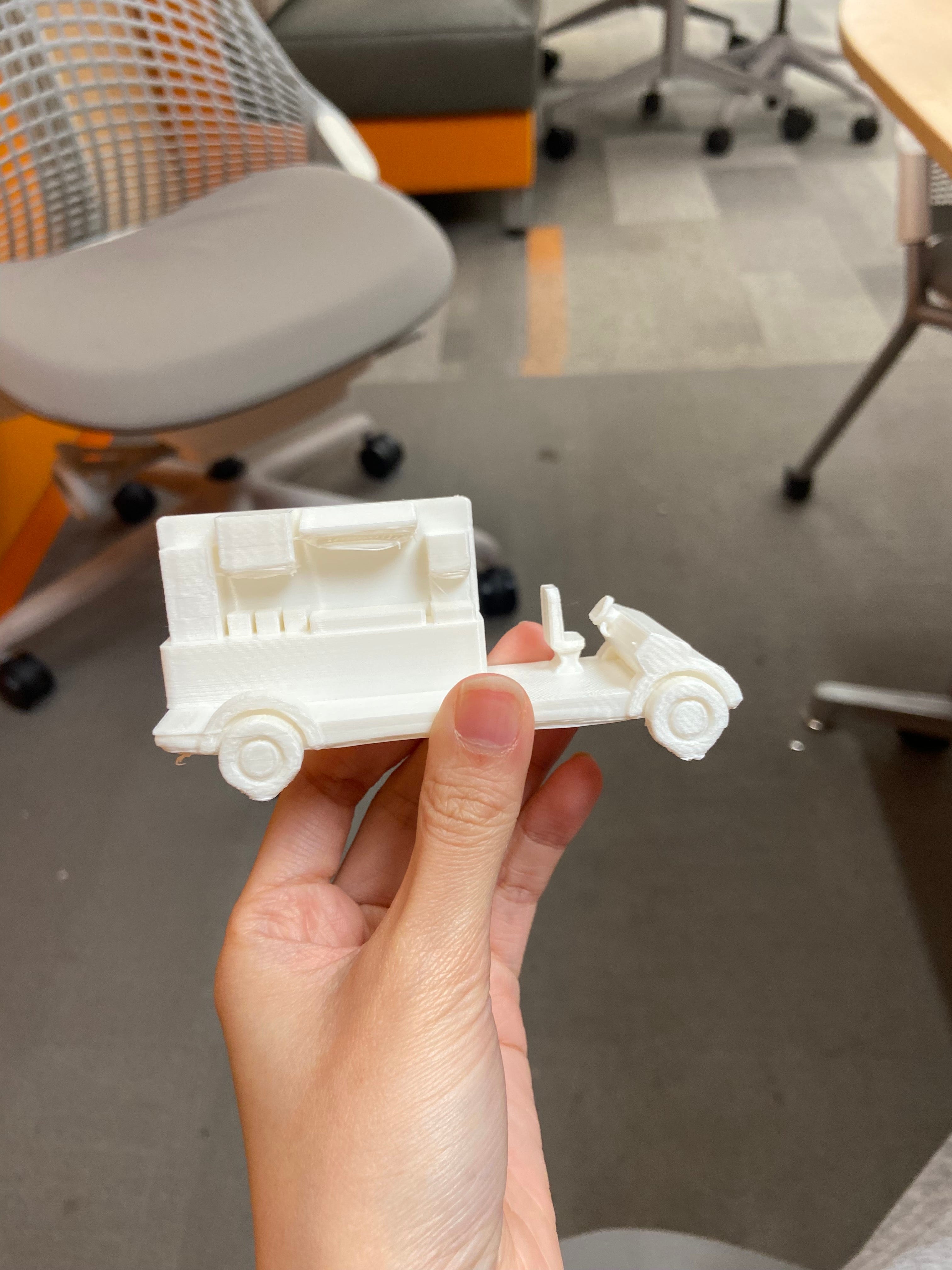
Ordering by phone, paper form or in person. Same routes at the same times weekly, backed by printed schedules and reminder calls. A waist-high serving ledge so nobody bends, climbs or enters the truck. Optional seating turns pickup into a community moment.
- 04
Evaluate
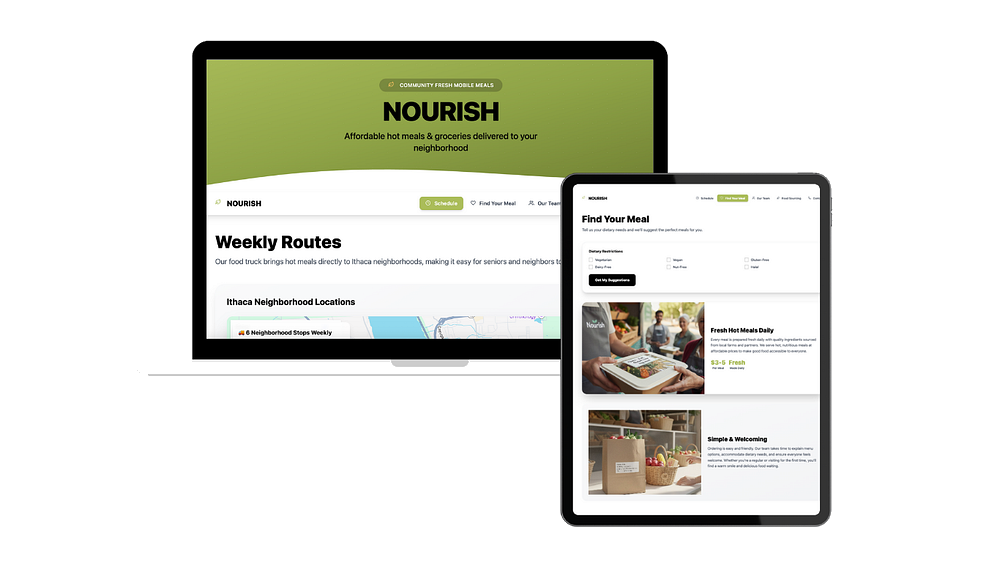
Three rounds: provider and older-adult interviews, low-fidelity concept testing, and medium-fidelity testing of the website and truck visuals.
outcomes
3
rounds of evaluation
0
apps or accounts required
60–78
age range of participants
reflection
Designing for older adults is not only about removing barriers - it is about honouring dignity, conserving energy and building trust over time. Nourish reframes food access as a relationship, not a transaction.
Read the full write-up on Medium ↗